Enjoy the Sky learn to fly! We offer two different courses for obtaining your sport pilot licence. The most common licence, which also gives you the most options for further training, is the Private Pilot Licence (PPL). You can also opt for the Light Aircraft Pilot Licence (LAPL).
As Breda Aviation, we are an ATO (Approved Training Organisation) and are committed to quality, service and flexibility. We strive to offer the best suitable training and give you as much space as possible as a student to learn and experience. Learn to fly really well with us and thus explore the skies as a confident pilot.
There are two types of sport flying licences:
We prepare you to take to the skies confidently: With us, you will learn everything you need to know as a pilot so that you can enjoy the skies safely and confidently. You will find that the freedom you experience as a sports pilot is something unique.
Below we take a closer look at what you need to get your PPL or LAPL, what you can do with it and how we help you do it to the best of your ability.
Everything still compact in a row:
| LAPL | PPL |
| 30 hours of flying minimum (including 6 hours solo) | 45 hours of flying minimum (including 10 hours solo) |
| Flying with up to 4 persons | No maximum number of passengers |
| Maximum aircraft weight 2,000 kg | Maximum aircraft weight 5,700 kg |
| After achieving licence, 10 hours of PIC (solo flying) before passengers are allowed on board | After getting certified, take passengers right away. |
| Restrictions on additional ratings | Additional ratings are possible |
Our digital platform BredaPedia: Throughout the training, you will use our online student tracking system which contains all training materials. You will also find there which exercises you can prepare, what your progress is, you can practice questions online and thus prepare yourself to the maximum for your exams. This for both theory and practice.
The ideal combination of the practical and theoretical part come together. Even after your training, BredaPedia offers you enormous convenience in e.g. your flight preparation and booking a plane for a flight.
Theory and the "Starter Bag": In addition to preparing the lessons through BredaPedia, we use Bas Vrijhof's books as a basis. Right at the start of your theory course, you can choose to buy a 'starter bag' through us. This bag contains almost everything you need for the theoretical and practical part of your training. For example, this bag contains:
Once you start with us and have the starter bag, you will be well on your way. You will still need to buy a VRF card, though. The VFR card is needed for the various Navigation and Overland flights. This card is reissued every year by LVNL.
Optionally, we advise you to buy a logbook and after a few lessons to buy your own headset. This is not necessary as you easily log your flights in BredaPedia and we have standard headsets available in all devices.
Practice is more than flying: The best part, of course, is practice. Because then we really get down to flying. With us, a lesson block lasts 1½ hours, part of which is briefing, practical flying and de-briefing. In total, you fly an average of 50 to 60 minutes per lesson on one of our beautiful aircraft. During the flights, you learn the real flying and everything comes together.
Radio Telephony Practice (RT): Taking Radio Telephony (RT) courses is done through Distance Learning and taught by our partner ATC-Comm. You can sign up for this through us, of course you may also choose your own RT provider. All you need is a computer with internet access and a headset/earphones. The exam also takes place online. We recommend you pass the theory course Communications before you start the practical course. As part of the RT qualification, in addition to passing the Communications theory course and RT practice, you must also pass your LPE (Language Proficiency Exam)
Language Proficiency Exam (LPE): Before you can apply for a pilot's licence, you need to get an LPE. If you do the RT practice through ATC-Comm then the LPE is usually done through them as well. The LPE is an online interview to test your English speaking skills. The outcome of the interview is an LPE with a level where ICAO level 6 is the highest attainable level. For your RT qualification, you need at least ICAO level 4.
A medical examination can sound quite intense when you first read or hear about it like this. Especially if you have had something in the past or even if you are suffering from something now. This is not a problem at all and in many cases it will not prevent you from flying. However, we do advise you to undergo a medical examination at the start of your training. For the PPL or the LAPL, this is a class two medical examination (EASA Class 2). The reason to do this at the start is because you can only fly solo and/or take exams once you hold a medical certificate.
Discount on your inspection: We work with AEC Medicals here at Breda International Airport. As a partner, we can offer you a discount should you decide to do your medical examination there. Of course, this is not necessary and you are completely free to choose your own aeromedical examiner.
Want to know more about the medical examination? Visit the website of AEC Medicals.

A pilot's licence is more than just a piece of paper. It opens the doors to freedom, adventure and a whole community of aviation enthusiasts. After completing the LAPL or PPL course at Breda Aviation, you can:
Flying independently, alone or with passengers
Enjoy the freedom of discovering Europe from the air
Grow further towards a CPL or ATPL
Continue to expand your skills with additional training
Sharing your passion for aviation with others
Whether you fly purely recreationally or have ambitions for more: with a licence in your pocket, you will experience the skies in a totally different way.
The LAPL (Light Aircraft Pilot Licence) and PPL (Private Pilot Licence) are both pilot's licences that allow you to fly as a private pilot, but they differ in capabilities and privileges.
An LAPL is intended for recreational use within Europe. It allows you to fly aircraft up to 2,000 kg and a maximum of four occupants (including yourself). After obtaining your LAPL, you must have flown solo for 10 hours before you are allowed to carry passengers.
A PPL gives you more freedom: you can fly worldwide (subject to local rules), carry passengers directly, and you can progress to vocational courses such as CPL or ATPL. So this licence offers more future opportunities if you want to grow further.
The cost of a PPL course depends on your pace, the type of aircraft and the number of lessons you need. As every student goes through a different route, it is best to request a brochure or schedule a no-obligation consultation to receive a personalised estimate.
The minimum age varies for each step in the course:
This allows you to start building flying experience at a young age.
No, an LAPL is a European licence and is only valid within the countries covered by the EASA (European Union Aviation Safety Agency). For flights outside Europe or if you want to fly worldwide in the future, a PPL is the better choice.
Yes, as soon as you have obtained your PPL licence, you may immediately take passengers - including friends or family members. You don't need to accrue extra hours for this. As long as you stay within the aircraft's limits, you can let someone fly alongside you.
To obtain a PPL, you need a minimum of 45 flying hours, including at least 10 hours solo. Some students need slightly more hours, depending on their aptitude and flying frequency.
For a PPL, you need a Class 2 medical examination. This examination is conducted by a certified aviation doctor and tests your general health, eyesight and hearing, among other things. A medical examination is mandatory before you can fly solo.
Choosing a flight school is personal and depends on your needs. Do you choose flexibility, personal attention, a modern fleet and the opportunity to grow? Then a certified ATO with years of experience, such as Breda Aviation, is an excellent choice. It is important that you feel comfortable with the instructors and teaching method.
Yes, you can. Many students start with an LAPL and later switch to a PPL. You then have to complete additional flying hours and meet the requirements for the PPL. This makes LAPL a low-threshold entry option for those who want to fly recreationally first.
It depends on your availability, commitment and weather conditions. On average, obtaining an LAPL or PPL takes between 6 and 12 months. For a more intensive course, it can be faster, and if you fly part-time or take more frequent breaks, it will take a bit longer. Your training will be tailored to your pace.
If you're all set, you can of course register straight away. Still have questions? Take a look at our FAQ page or contact us, we will be happy to help.
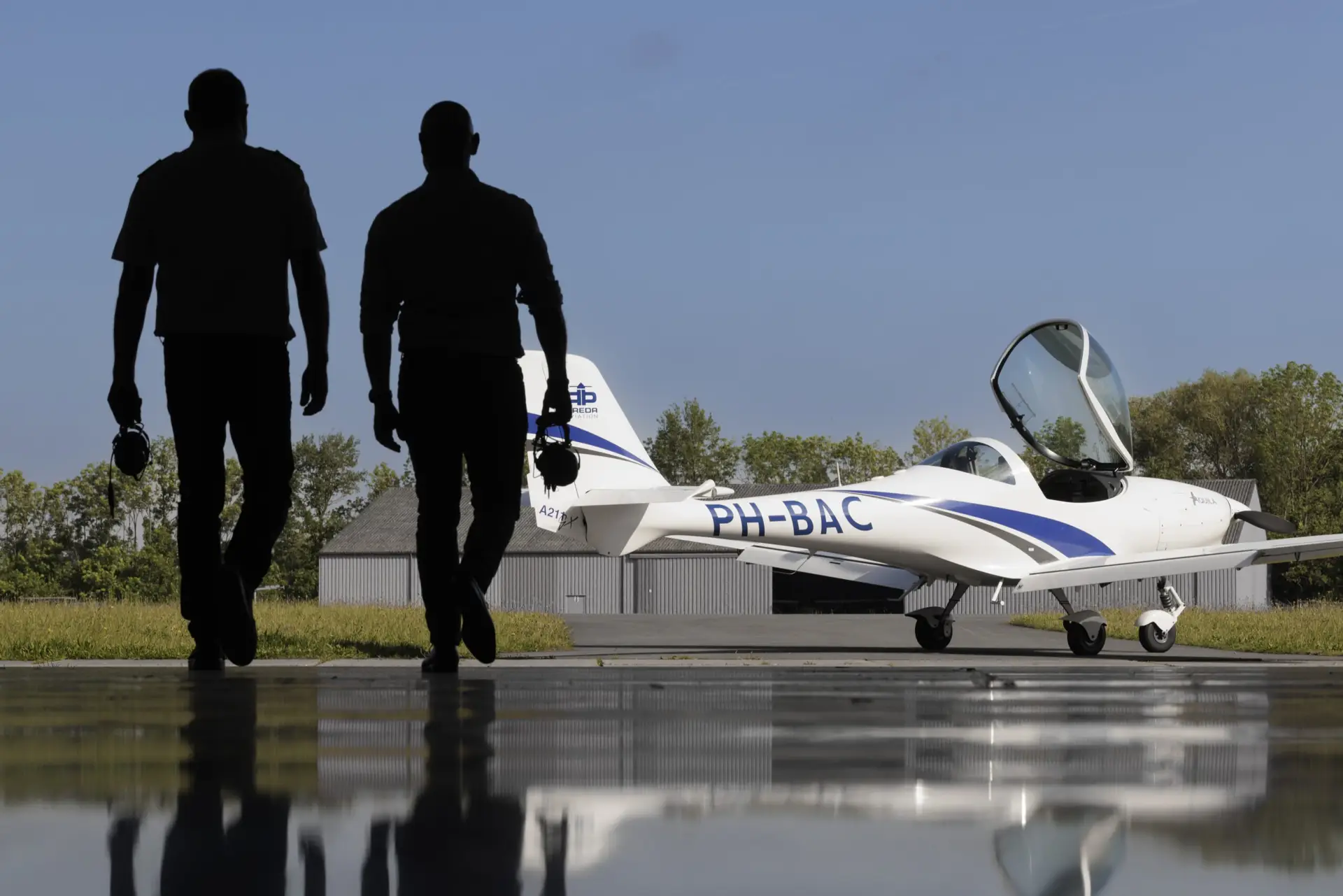
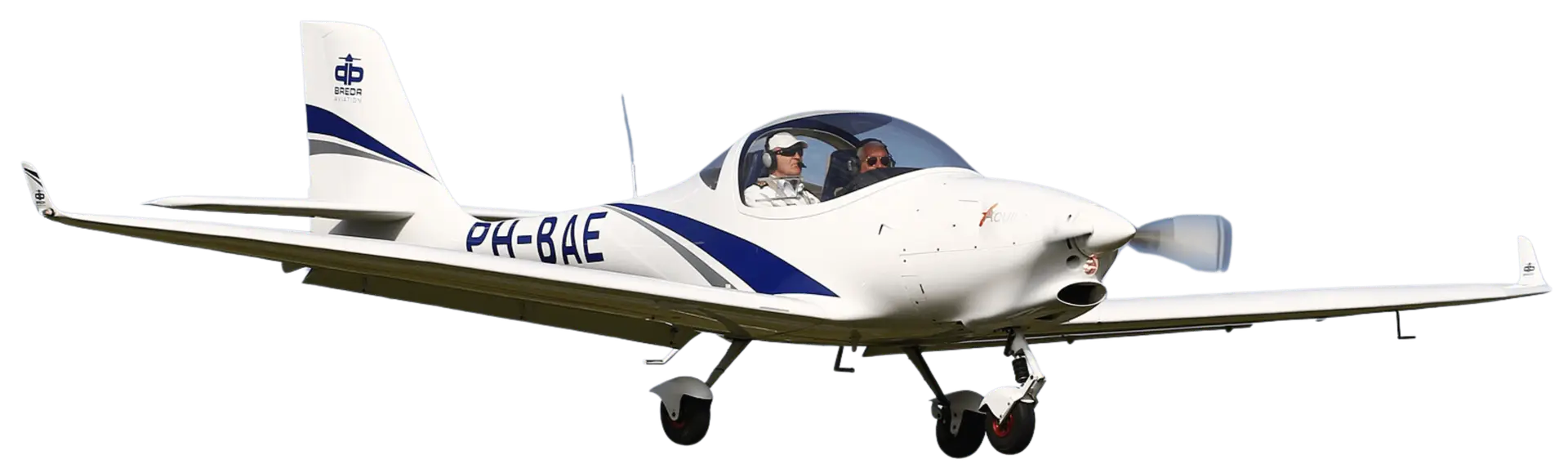
Basically, your training starts with obtaining your PPL (Private Pilot Licence). We use the Aquila A211 for this purpose. This is a modern two-seater in which all PPL practice can be flown. This low-decker is equipped with modern avionics and a spacious open cockpit.
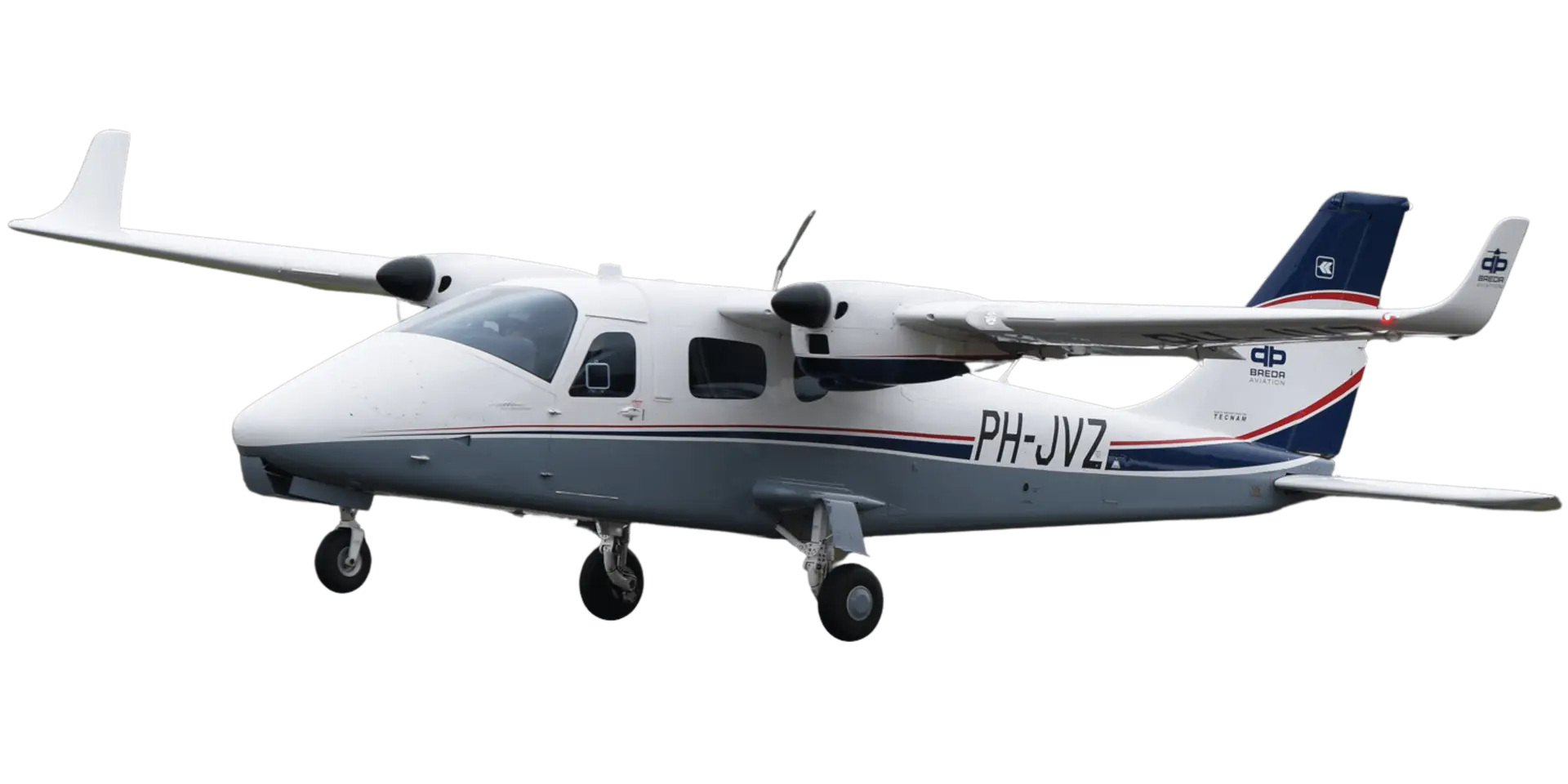
Apart from this, there is also the option to get your PPL on the Tecnam P2010. This is a very complete and modern high-decker. This aircraft is also used for the Instrument Rating (IR) part of the ATPL training.

After entering your e-mail address, you will receive the brochure by e-mail.